Fabaceae
Fabaceae Lindl. (Leguminosae) is the third-largest family of flowering plants, comprising approximately 765–780 genera and 19,500–20,500 species distributed throughout the world. Modern molecular phylogenetic studies support the recognition of six subfamilies: Cercidoideae, Detarioideae, Dialioideae, Duparquetioideae, Caesalpinioideae, and Papilionoideae (Faboideae). The former family Mimosaceae and much of Caesalpiniaceae are now treated as subfamilies within Fabaceae. Members are distinguished by compound stipulate leaves, nitrogen-fixing root nodules in many species, legume fruits, and highly diverse floral morphology.
Key characteristics
- Herbs, shrubs, trees, or climbers
- Leaves alternate, usually compound and stipulate
- Nitrogen-fixing root nodules common
- Flowers actinomorphic or zygomorphic
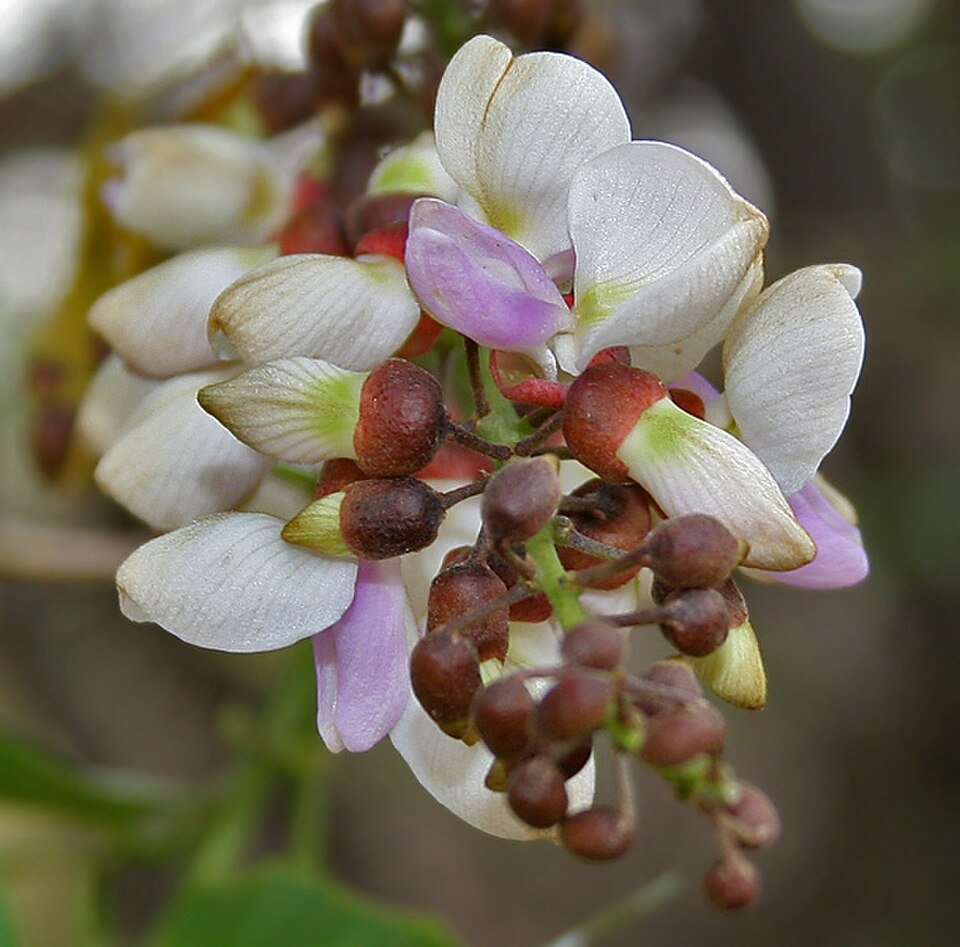
- Papilionaceous corolla common in Papilionoideae
- Superior unicarpellate ovary
- Fruit a legume (pod)
- Seeds generally rich in protein
Distribution
Fabaceae has an almost cosmopolitan distribution, occurring from tropical rainforests and deserts to temperate grasslands and alpine regions. The greatest diversity occurs in tropical South America, tropical Africa, Australia, and South Asia. Members occupy forests, savannas, grasslands, wetlands, coastal habitats, deserts, montane ecosystems, and agricultural landscapes. Fabaceae is distributed throughout all phytogeographical regions of Pakistan, including the Himalayan, Karakoram, and Hindu Kush ranges, Upper and Plains, Potohar Plateau, Salt Range, western dry mountains, Plateau, Lower Indus Plain, riverine forests, and the deserts of Cholistan, Thal, and Thar. Species occur in alpine meadows, forests, scrublands, rangelands, cultivated fields, wetlands, and arid ecosystems, making Fabaceae one of the country's most widespread and ecologically significant plant families.