
Cassia fistula L.
Description
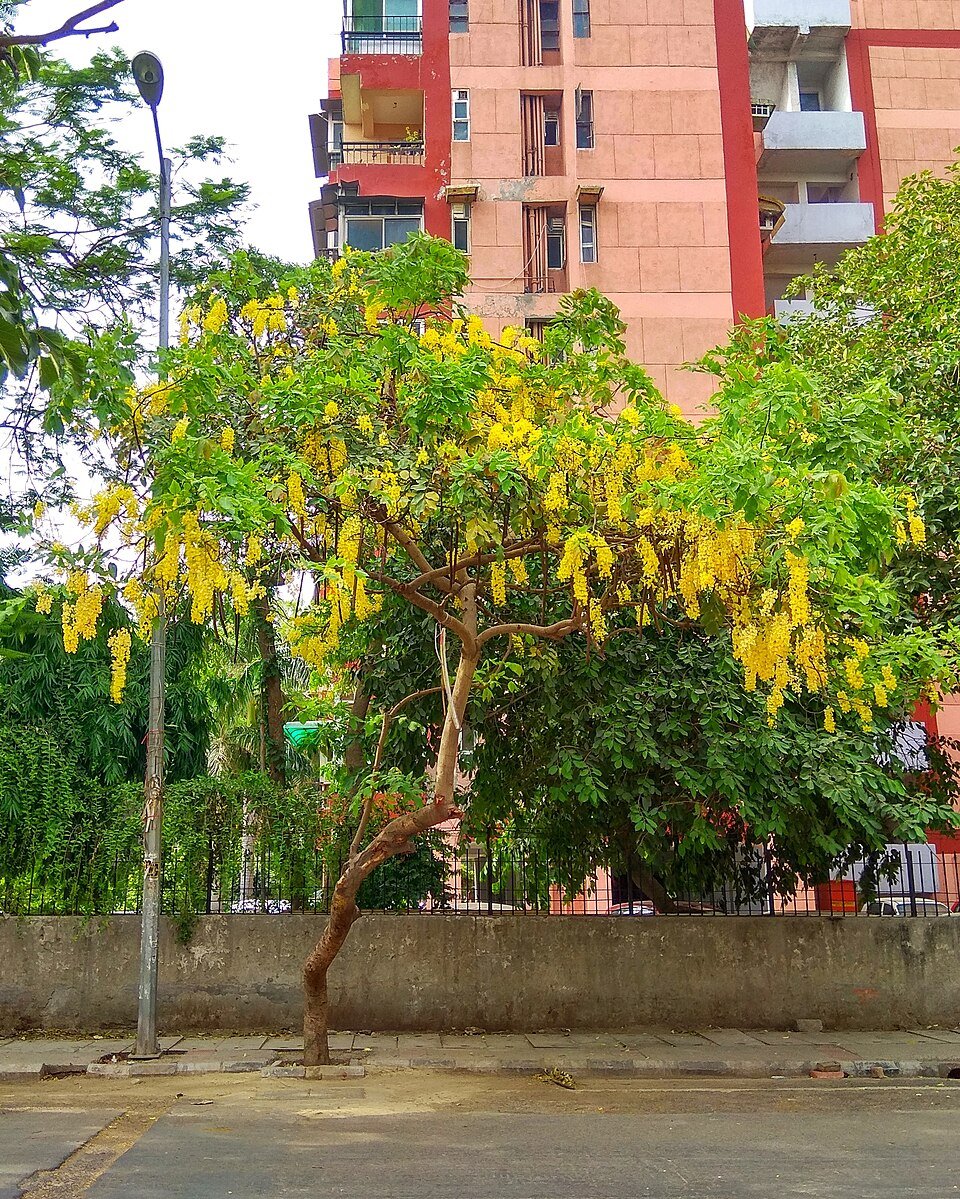
Cassia fistula is a medium-sized deciduous tree, usually 10–20 m tall, with a straight trunk and a spreading rounded crown. The bark is smooth to slightly rough, greyish-brown, and becomes darker with age. Leaves are paripinnate compound, alternate, and usually 15–40 cm long, bearing several pairs of opposite leaflets. Leaflets are ovate to elliptic, 5–15 cm long, with entire margins, rounded bases, and pointed apices. Flowers are bisexual, bright yellow, large, and arranged in long, pendulous racemes, often 20–60 cm long. Each flower consists of five yellow petals, numerous stamens of unequal length, and a curved ovary typical of Caesalpinioideae. Fruits are long, cylindrical, dark brown to black woody pods, usually 30–60 cm long, containing numerous seeds embedded in a dark sticky pulp.
Diagnostic Characters
Distribution
Native range: Native to Indian subcontinent, Southeast Asia.
In Pakistan: Common throughout Pakistan, India, Bangladesh, Sri Lanka. In Pakistan cultivated region.
Phenology
Ethnobotany & Uses
Hello! I'm UniFlora AI. Ask me anything about Amal tas (*Cassia fistula*) — identification tips, flowering season, uses, campus locations, or taxonomy.
Powered by UniFlora knowledge base.
Where it grows on campus
Taxonomic Notes
Cassia fistula belongs to the subfamily Caesalpinioideae and is one of the most recognizable ornamental Fabaceae trees.
References
- World Flora Online.