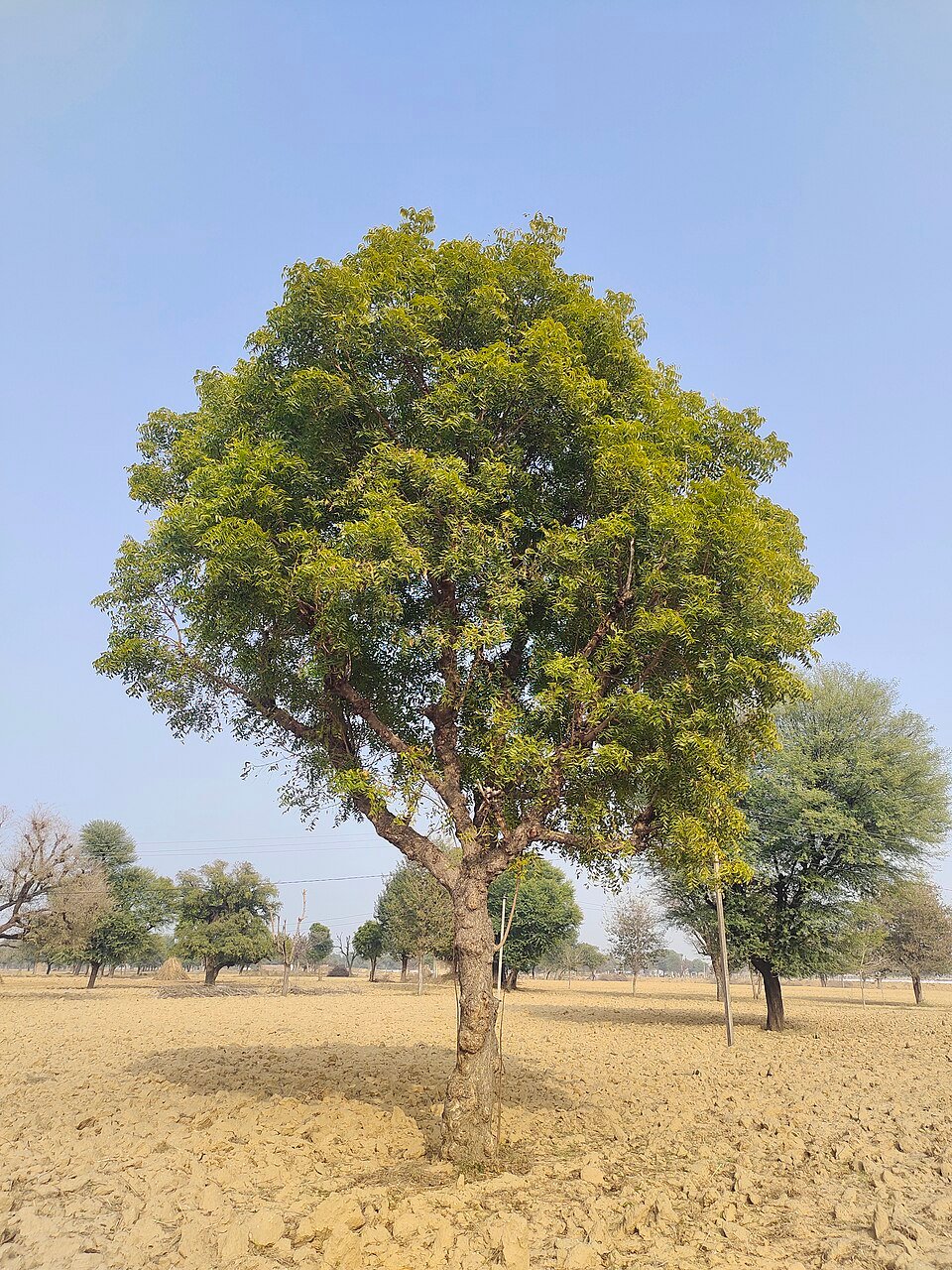
Meliaceae
Meliaceae Juss. is an accepted family in the order Sapindales according to the Angiosperm Phylogeny Group IV (APG IV) and is recognized by Plants of the World Online (POWO) and World Flora Online (WFO). The family comprises approximately 50–55 genera and 700–750 species, distributed mainly in tropical and subtropical regions. Molecular phylogenetic studies support the monophyly of the family and have refined relationships among its major tribes and genera. Members are characterized by woody habit, pinnately compound leaves, small fragrant flowers, superior ovaries, woody capsules or fleshy fruits, and the production of biologically active limonoids.
Key characteristics
- Trees or shrubs
- Leaves alternate, exstipulate, pinnately or bipinnately compound
- Flowers small, fragrant, actinomorphic
- Stamens commonly united into a staminal tube
- Superior ovary
- Fruit a capsule, berry, or drupe
- Tissues rich in bitter limonoids
Distribution
Meliaceae has a pantropical distribution, with the greatest diversity occurring in the tropical forests of Asia, Africa, Australia, Central America, and South America. Members inhabit rainforests, monsoon forests, dry deciduous forests, riverine forests, coastal woodlands, and cultivated landscapes. In Pakistan, Meliaceae occurs, and lower Himalayan foothills. Most species are cultivated or naturalized in urban landscapes, agricultural areas, roadside plantations, riverine forests, and botanical gardens. Native representatives occur mainly in subtropical forests, while Azadirachta indica, Melia azedarach, and Swietenia species are widely planted throughout the country.