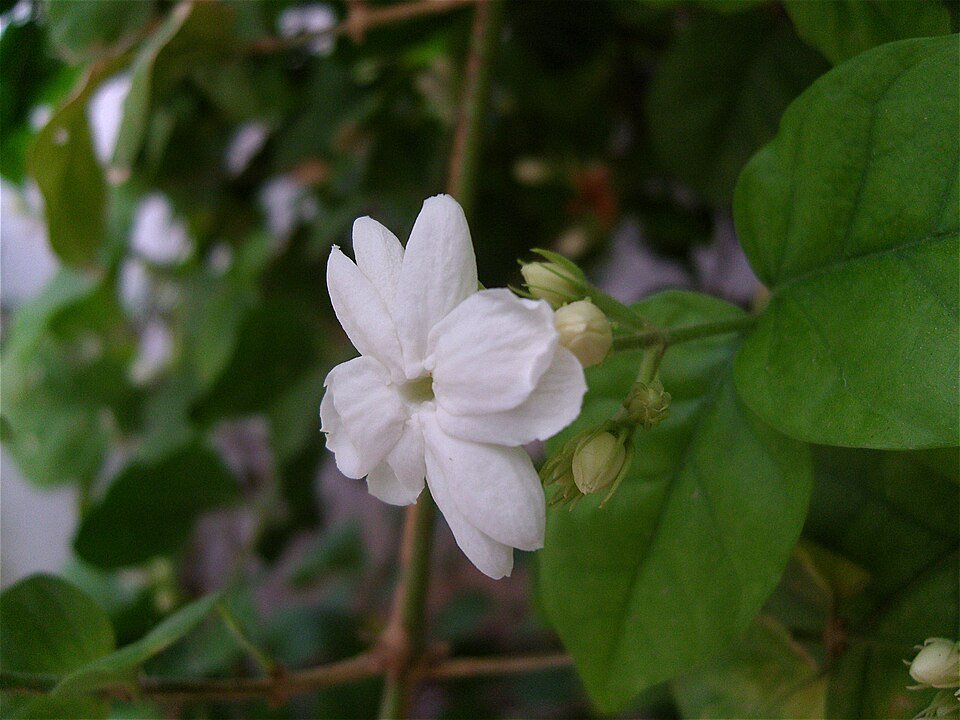
Oleaceae
Oleaceae Hoffmanns. & Link comprises approximately 25–28 genera and 700–900 species, distributed mainly in temperate and subtropical regions, with some tropical representatives. Molecular phylogenetic studies support the monophyly of the family and have clarified relationships among its major tribes and genera. Members are characterized by opposite leaves, fragrant actinomorphic flowers, a bicarpellate superior ovary, and fruits that may be berries, drupes, capsules, or samaras.
Key characteristics
- Trees, shrubs, or woody climbers
- Leaves opposite, simple or pinnately compound, exstipulate
- Flowers fragrant and actinomorphic
- Corolla usually four-lobed
- Stamens usually two
- Superior bicarpellate ovary
- Fruit a drupe, berry, capsule, or samara
Distribution
Oleaceae has a nearly cosmopolitan distribution, occurring mainly in temperate and subtropical regions of Europe, Asia, Africa, Australia, and the Americas. Species inhabit forests, scrublands, mountain slopes, river valleys, Mediterranean woodlands, and cultivated landscapes. In Pakistan, Oleaceae occurs in Potohar Plateau, Salt Range, Murree Hills, and the western Himalayan region. Members are found in subtropical forests, temperate woodlands, river valleys, scrub vegetation, orchards, parks, and gardens. Jasminum officinale, Jasminum sambac, Olea europaea, and Fraxinus xanthoxyloides are among the best-known representatives.