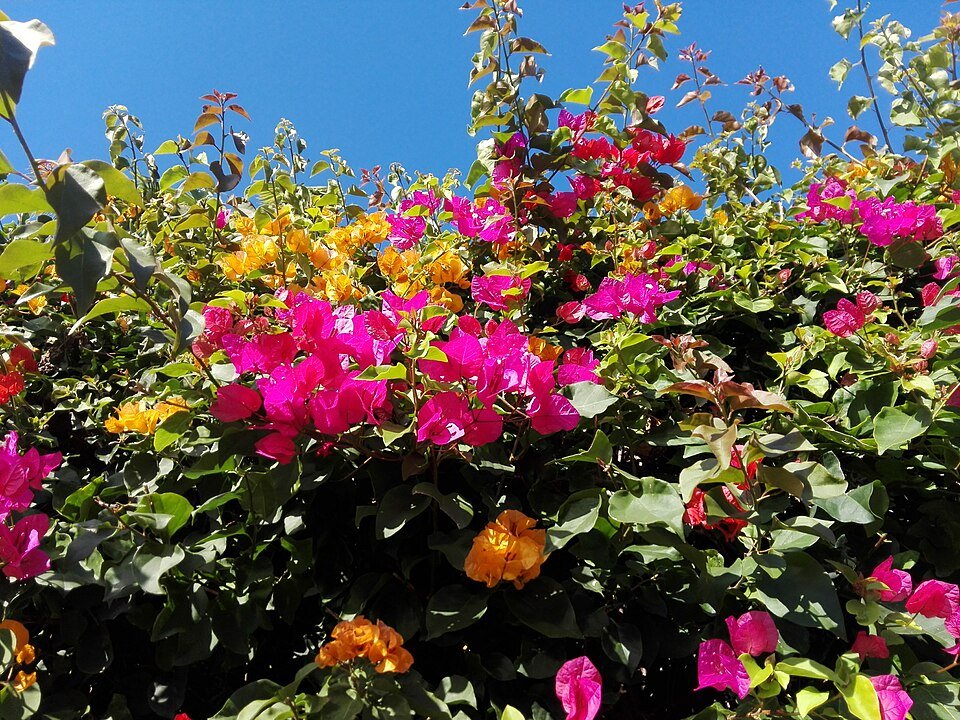
Nyctaginaceae
Nyctaginaceae Juss. comprises approximately 30–35 genera and 400–450 species, distributed mainly in tropical and subtropical regions of the Americas, with several genera extending into Africa, Asia, and the Pacific. Molecular phylogenetic studies support the family's monophyly and have clarified relationships among major genera. Members are characterized by swollen stem nodes, simple opposite leaves, petaloid calyces, the absence of true petals, inferior ovaries, and anthocarp fruits enclosed within the persistent floral tube.
Key characteristics
- Herbs, shrubs, climbers, or trees
- Stems with swollen nodes
- Leaves simple, opposite, exstipulate
- Flowers without true petals
- Calyx petaloid and colourful
- Ovary inferior
- Fruit an anthocarp enclosed by the persistent floral tube
- Colourful bracts common in many species
Distribution
Nyctaginaceae is distributed throughout tropical and subtropical regions, with its greatest diversity in Central and South America, especially Mexico and the Andes. Members occur in dry forests, deserts, grasslands, coastal habitats, tropical woodlands, and disturbed areas. Many species have been widely introduced as ornamentals. In Pakistan, Nyctaginaceae occurs. Species are found in gardens, parks, roadsides, urban landscapes, agricultural fields, wastelands, riverbanks, and dry scrublands. Bougainvillea glabra, Bougainvillea spectabilis, and Mirabilis jalapa are widely cultivated throughout the country.